Home / Sizing Posts for a Twelve Foot Leaf
Sizing Posts for a Twelve Foot Leaf
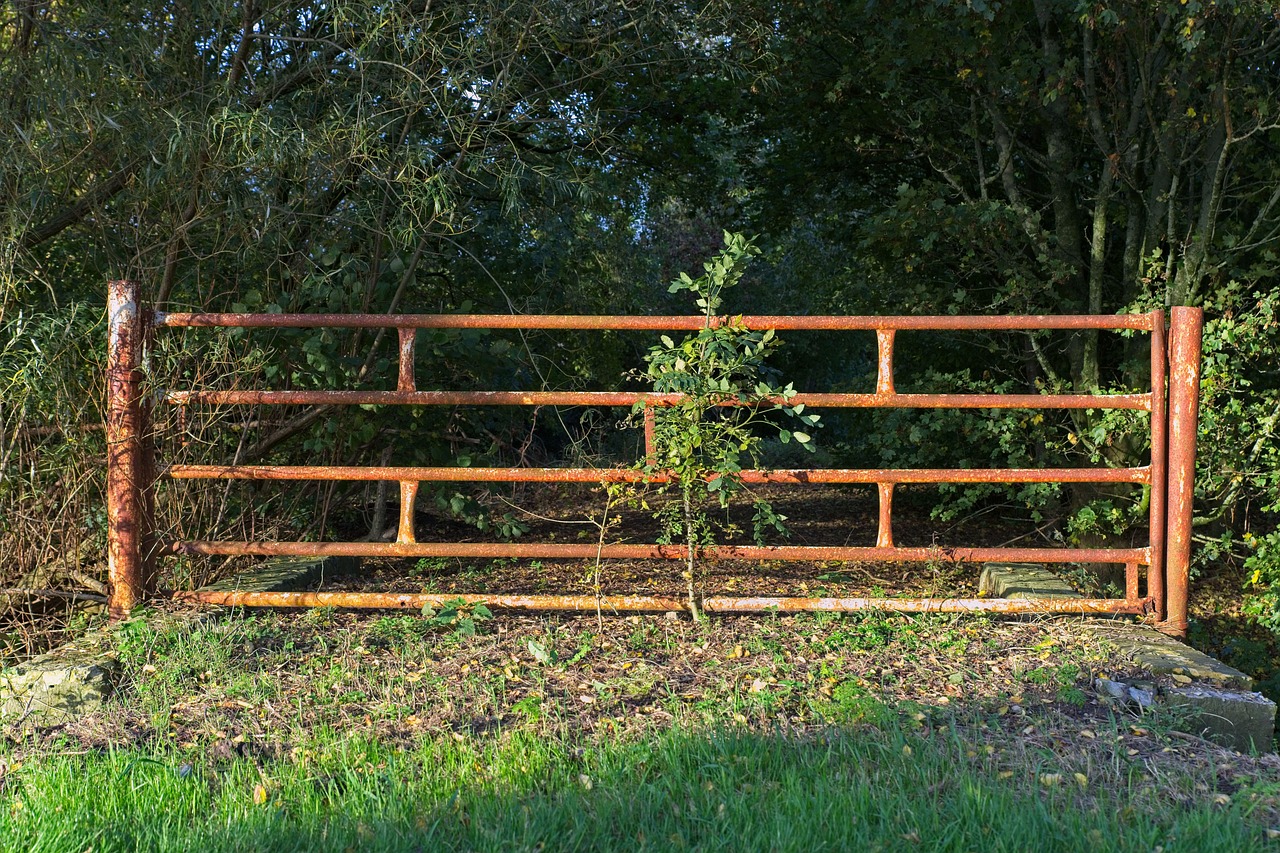
A twelve foot gate leaf is a common size for a farm lane or a single lane entry, and the post that carries it is often chosen by habit rather than by reasoning. A few plain ideas about how the load travels from the leaf into the ground make the choice much easier to judge. No formulas are needed, only a picture of what is pulling on what.
Where the load goes
The leaf hangs from two hinges on the post. Its weight pulls down on both hinges, but because the leaf is long, its weight also acts like a lever. The top hinge is pulled toward the gate, and the bottom hinge is pushed toward the post. This lever effect is much larger than the weight itself, and it tries to tip the post toward the open end of the gate.
The longer the leaf, the longer the lever. A twelve foot leaf has a lever arm about twice that of a six foot leaf, so for the same weight per foot, the tipping force on the post is roughly double, and a heavier leaf adds to it. That is why a post that holds a short walk gate perfectly well can lean under a long one.
Wall thickness
A post resists tipping by bending stiffness. A thicker wall and a larger diameter both add stiffness, but diameter adds far more. Doubling the width of a tube makes it many times stiffer, while doubling the wall thickness only doubles it. A pipe with a larger diameter and a moderate wall is often better than a small pipe with a thick wall, and it uses less steel.
For a twelve foot pipe gate, posts of about four to six inches in diameter are common, with the larger size favored for heavy leaves or poor soil. Wall thickness commonly falls in the range often described as schedule forty for round pipe. Thin walled tube suits light leaves but can dent or buckle near the ground line, where bending stress is highest.
Depth in the ground
The part below ground works as the other end of the lever. A post must resist being rotated by the soil around it, and deeper means a longer resisting arm. A shallow post of any strength will lean, since it pivots near the surface.
A common planning guideline places about a third to a half of the post's total length below grade for gate posts, with a minimum often near three feet and four feet or more for heavy leaves. In loose or soft soil, going deeper helps more than making the post thicker. In hard rock, depth may be limited, and the answer shifts to a wider footing or anchoring into the rock.
Diameter of the hole
The concrete around the post matters as much as the post itself. A wider footing engages more soil and resists rotation better. A common rule is a hole three times the width of the post, so a four inch post gets a twelve inch hole. A wider hole at the top, where soil pressure is greatest, gives extra help. A bell shaped bottom resists lifting, which matters little for a gate post but helps with frost in cold regions.
The depth to diameter ratio is worth thinking about in plain terms. A narrow hole that is very deep behaves like a stake, while a wide hole that is shallow behaves like a block. The best results come from a hole that is both deep enough and wide enough to grip a large mass of soil.
Heavy versus light leaves
Leaf weight varies widely. A leaf of lightweight tubing with open bars weighs far less than a solid plate or a heavy pipe frame of the same length. Add a cattle panel or wire infill and the weight rises again. If a gate has an automatic operator, the post also takes a pushing force from the operator arm, and that force acts at a different height and direction.
Think in terms of weight times length. Anything that makes the leaf heavier or longer demands a stouter post, a deeper hole or both. A leaf that doubles in weight needs roughly twice the resistance from the post and its footing.
The latch post
The post at the free end carries far less load, since it only catches the gate rather than holding it up. It still needs to be firm. Cattle push on it, and a loose latch post lets the latch slip. A somewhat lighter post is acceptable here, but it should be set in concrete and kept in line with the hinge post. If the gate is swung into its latch post on closing, add a stop so the leaf does not strike it hard and loosen it.
Bracing the hinge post
When a post alone is not enough, a brace helps. A diagonal brace running from the top of the hinge post to the adjacent fence post or to a buried block resists tipping toward the opening. Another option is a horizontal rail tied to the next post along the fence line, forming a rigid frame. These methods turn a single cantilever into a braced structure and reduce the stress on the hinge post substantially.
For a very heavy gate, a pair of posts set close together and tied with a cross bar is a stronger hinge support than a single large pipe.
Signs the post is too small
Watch for a gate that sags at the latch end even after hinges are tightened, a post that leans a few degrees toward the opening, cracks in the concrete collar around the base, or a gap opening at the top of the footing as the post rocks. Any of these means the post is moving. Another clue is a gate that swings back by itself because the post has tilted and the hinge axis is no longer vertical.
Check plumb with a level on two faces of the post. The reading should stay the same from season to season. If it changes, the post is moving and needs help.
Practical sequence
Begin by estimating leaf weight, either from the material list or by weighing it. Decide the span and the style of the gate. Choose a post diameter that suits the span, a wall thickness that handles denting and bending, and a depth that suits the soil. Dig the hole wider than you think necessary. Set the post plumb, brace it while the concrete cures, and wait before hanging the leaf, since green concrete has not yet reached its strength.
The rule that serves best is to put money into the post and the footing, not into the leaf. A modest leaf on a solid post lasts for decades, while a fine leaf on a weak post sags in a season. For a twelve foot leaf, the ground below the gate does half the work.